Looking for the latest information on Chapter 5 Modeling The Transition? We've researched comprehensive data, records, and insights about Chapter 5 Modeling The Transition.
Important Facts
Explore the main sources for Chapter 5 Modeling The Transition.
Latest News
Stay updated on Chapter 5 Modeling The Transition's newest achievements.
360° Poppy Playtime Chapter 5: BEST MOMENTS + FINAL BOSS in VR
Bohr Model of the Hydrogen Atom, Electron Transitions, Atomic Energy Levels, Lyman & Balmer Series
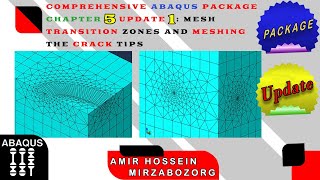
Comprehensive Abaqus Package Chapter 5 Update 1: Mesh Transition Zones and Meshing the Crack preview
6.2.2 State Transition Diagrams
Modelling With Matrices: Transition Matrices
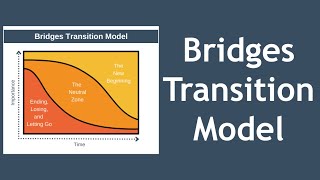
Bridges Transition Model Explained
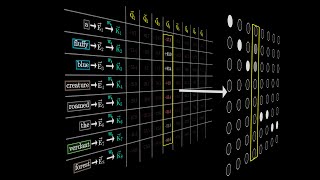
Attention in transformers, step-by-step | Deep Learning Chapter 6
Can I beat Poppy Playtime Chapter 5 AS THE PROTOTYPE (Mods)
The Five Step Method - Math Modelling | Lecture 1
NANO266 Lecture 11 - Modeling Transition States
Expert Insights
Data is compiled from public records and verified media reports.
Last Updated: September 18, 2026
Final Thoughts
For 2026, Chapter 5 Modeling The Transition remains one of the most searched-for information profiles. Check back for the latest updates.
Disclaimer: Disclaimer: All information is compiled from publicly available data, media reports, and analysis. Actual details may vary.
Summary
Jon Geers, CVA, shares his recommendations for It is common that the motion of the objects that we are interested in is described using continuous-time differential equations while ... Which one-dimensional problems close in closed form? This chemistry video tutorial focuses on the Bohr Files and video of this update are uploaded in the folder of MIT 6.004 Computation Structures, Spring 2017 Instructor: Chris Terman View the complete course: ocw.mit.edu/6-004S17 ... In this video I go over the basics of Demystifying attention, the key mechanism inside transformers and LLMs. Instead of sponsored ad reads, these lessons are ... Today I try to be the entirety of Poppy Playtime In my first lecture on mathematical This is a recording of Lecture 11 of UCSD NANO266 Quantum Mechanical