Looking for the latest information on Touchdesigner Basic Sop Instancing? We've compiled comprehensive data, records, and insights about Touchdesigner Basic Sop Instancing.
Core Information
Explore the key sources for Touchdesigner Basic Sop Instancing.
Latest News
Stay updated on Touchdesigner Basic Sop Instancing's newest achievements.
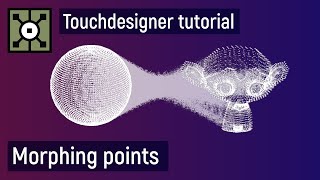
Morphing between objects - Instancing (Touchdesigner tutorial)
TouchDesigner POPs Tutorial: Create Image Instances from any Geometry
Instancing from video data in TouchDesigner Tutorial
Touchdesigner Tutorial in 10 Minutes | Geometry instancing network
TouchDesigner Tutorial: Symmetrical Mandala Pattern inspired by Sacred Geometry Using SOP Instancing
15 - Working with SOPs and MATs - TouchDesigner Tutorial: Beginner Crash Course
Butterflies: Animating Instanced SOPs with a Vertex Shader in TouchDesigner (Tutorial)
Intro to POPs: The New Operator Family in TouchDesigner - TouchDesigner Tutorial 171
10 – SOPs – TouchDesigner Beginner Course
Vera Molnar Style Instancing in TouchDesigner - TouchDesigner Tutorial 093
Deep Dive
Data is compiled from public records and verified media reports.
Last Updated: September 18, 2026
Conclusion
For 2026, Touchdesigner Basic Sop Instancing remains one of the most talked-about information profiles. Check back for the newest reports.
Disclaimer: Disclaimer: All information is compiled from publicly available data, media reports, and analysis. Actual details may vary.
Summary
Feel free to and ask questions! Let's give the point file in TOP the love that it deserves. Such a great tool to up your Please watch this tutorial if you arent fimiliar with Get access to over 300+ hours of structured, professional course content, 200+ hours of Accelerator Session masterclass ... Note: abstime.seconds*0.3 is the first function that is then copied to more parameters later, forgot to say that the “*” character has ... We start with a generator network using GLSL and noise to produce vibrant colors. The Classic Network includes a render, ... In these tutorial, we look into Surface Operators (